How to Create a Certificate of Authenticity for Your Artwork
What this helps you do
Issue an accurate certificate and retain the record behind it.
A Certificate of Authenticity is a signed record that describes a work and the issuer's statement about it. It can support a clear provenance record, but it does not by itself prove authorship, ownership, value, or legal rights.
What is a Certificate of Authenticity?
A Certificate of Authenticity (COA) is a signed document that records the artwork and an issuer's statement about it. When issued by the artist with accurate supporting records, it can be useful provenance documentation. It is not a substitute for an independent authentication, appraisal, title record, or legal advice.
For collectors, a COA can add useful detail to the artwork file. For artists, it can make studio records more consistent. Together with invoices, condition records, images, and correspondence, it can help build a clearer paper trail for insurance, resale, or an estate. Its weight will depend on the facts and jurisdiction.
When should you issue a COA?
You may choose to provide a COA with an original work, a limited edition, a commission, or a gift. There is no universal legal requirement to issue one. If you do issue a COA, make sure its contents are accurate and keep a matching record.
COAs are especially important for:
- Original paintings, drawings, and sculptures
- Limited edition prints and multiples
- Photography (especially limited editions)
- Mixed media and installation works
- Digital art with physical components
For open edition prints or merchandise (postcards, posters), COAs are typically not necessary.
What to include on a COA
A useful Certificate of Authenticity can include:
- Issuer details: the name and contact route of the person or entity making the statement
- Title of the artwork: Including “Untitled” if applicable
- Year of creation
- Medium: Complete materials description (e.g., “Oil on linen canvas”)
- Dimensions: Height x width (x depth if applicable), with unit specified
- Image of the artwork: A clear photograph of the work
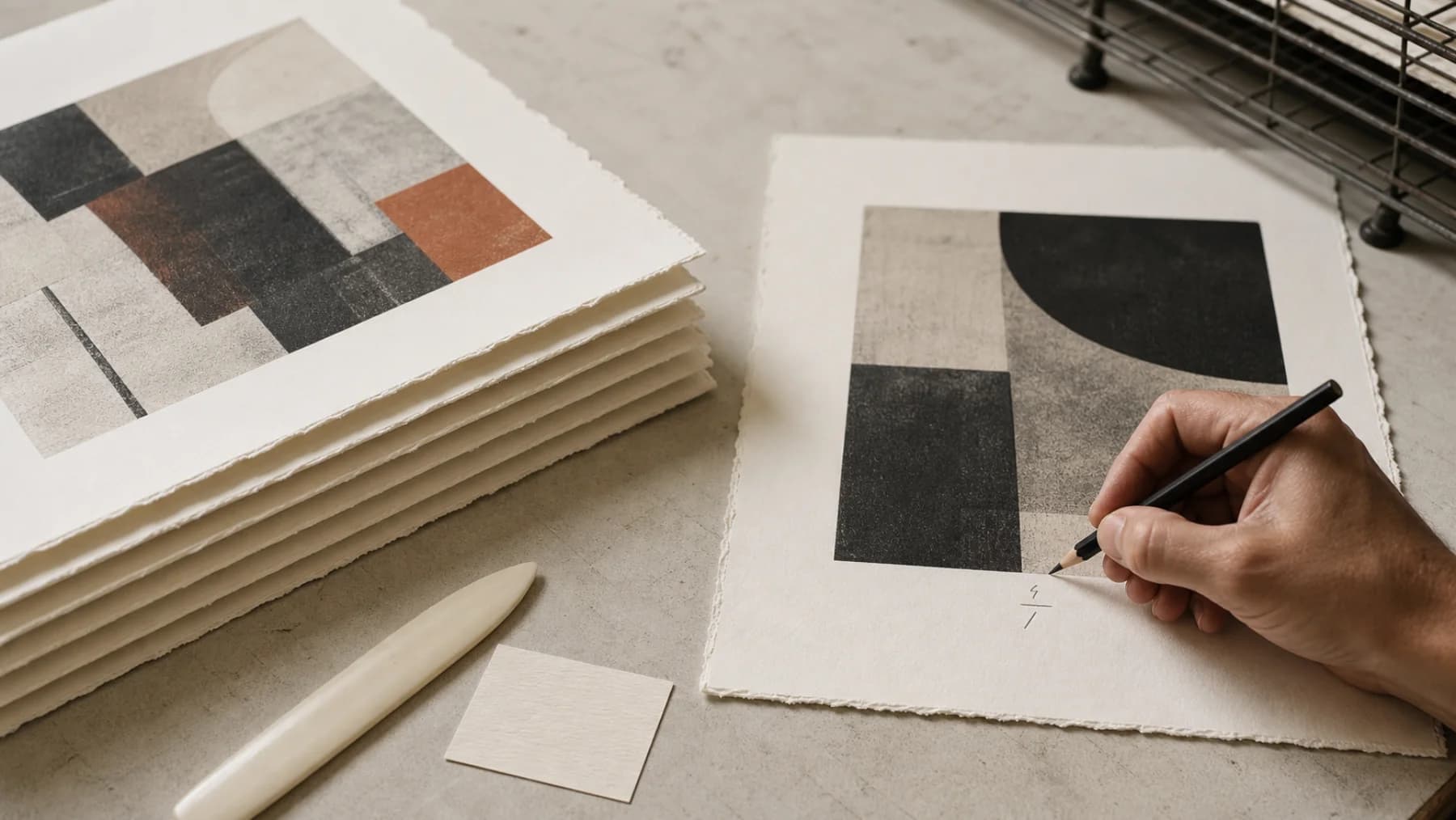
- Edition information if applicable: edition size, copy number (e.g., “3/25”)
- Certificate number: A unique identifier for the certificate itself
- Date of issue: When the COA was created
- Signature or other issuer confirmation: a method that links the statement to the issuer
- Statement of authenticity that accurately reflects what the issuer knows about the work
Writing the authenticity statement
The statement doesn't need to be long or legalistic. A clear, straightforward declaration works best. Here's a template:
“I, [Issuer Name], state that, to the best of my knowledge, this record describes the artwork identified above. This certificate should be kept with the work's supporting documentation.”
For limited editions, you might add:
“This work is number [X] of an edition stated as [Y]. The edition and production details recorded here are accurate to the best of my knowledge.”
COA best practices
- Print on quality paper
Choose a durable format that you can reproduce and store. Paper weight does not make a certificate more authoritative.
- Keep a copy for yourself
Always keep a copy or digital record of every COA you issue. This is part of your artwork records and can be important if authentication questions come up later.
- Use a consistent numbering system
Use a unique identifier that links the certificate to the artwork record. It does not need to reveal private details.
- Include a photograph
A clear image of the artwork on the certificate makes it much more useful as a reference document. It should match the image and details you keep in your own artwork record.
- Don't attach the COA to the artwork
COAs should be stored separately from the artwork itself. If attached to the back of a canvas, for example, they can be damaged or lost during framing or shipping.
Creating COAs: manual vs software
You can create COAs manually using a word processor or design tool, but this means formatting each certificate individually, manually entering artwork details, and keeping track of certificate numbers yourself.
Dedicated art inventory tools like Artwork Codex can generate COAs automatically from your artwork records. You upload your signature once, and the system pulls in the artwork title, medium, dimensions, year, image, and auto-assigns a certificate number. This saves time and ensures consistency across all your certificates.
Whichever method you use, keep the statement accurate and retain matching studio records. A COA is one part of documentation, not a replacement for invoices, images, condition records, or written agreements.
Frequently asked questions
Does a COA increase the value of my artwork?
A COA does not set or guarantee value. Buyers may consider it alongside provenance, condition, market evidence, and other records. For a valuation, speak to a qualified appraiser in the relevant market.
Can anyone issue a COA?
Anyone can make a statement, but its usefulness depends on their knowledge, evidence, and authority to make it. After an artist's death, authentication and estate questions can be complex. Seek specialist advice before issuing or relying on a statement about a historic work.
Should I issue COAs for older work I've already sold?
If you have sufficient records to describe a work accurately, you may choose to issue a dated statement. Do not make claims you cannot support, and keep a copy with your records.
Do I need a COA for prints?
A COA is optional for prints. If you issue one, state the edition information and production method accurately. Local consumer and edition rules may also apply.
Sources and further reading
Create the certificate from the artwork record
Artwork Codex can generate a numbered certificate with the artwork image, recorded details, and signature.
Paid checkout requires a card. Cancel anytime. The Free plan remains available without a card.
Free and Starter include one certificate. Studio includes unlimited certificates.