Studio Lighting for Painters: North Light, CRI, and Color Temperature
What this helps you do
See color consistently while you work and photograph finished pieces.
Studio lighting is the most underrated variable in painting. A canvas that looks vivid under your warm tungsten studio lamp can read flat and yellow on a gallery wall. Most of those surprises trace back to the bulbs over your easel. Here is what actually matters when lighting a studio for painting, and how to set up consistent light in any space.
Why north light became the standard
For centuries, painters built their studios with windows facing north (or south, in the southern hemisphere). North light has two qualities that other directions do not.
- It does not change. A north-facing window receives indirect skylight. The sun never enters directly, so the light stays consistent through the day.
- It is cool and even. North light has a colour temperature of roughly 6500 Kelvin, similar to overcast daylight. It does not warm or cool as the sun moves, which means the colours you mix in the morning still read accurately in the afternoon.
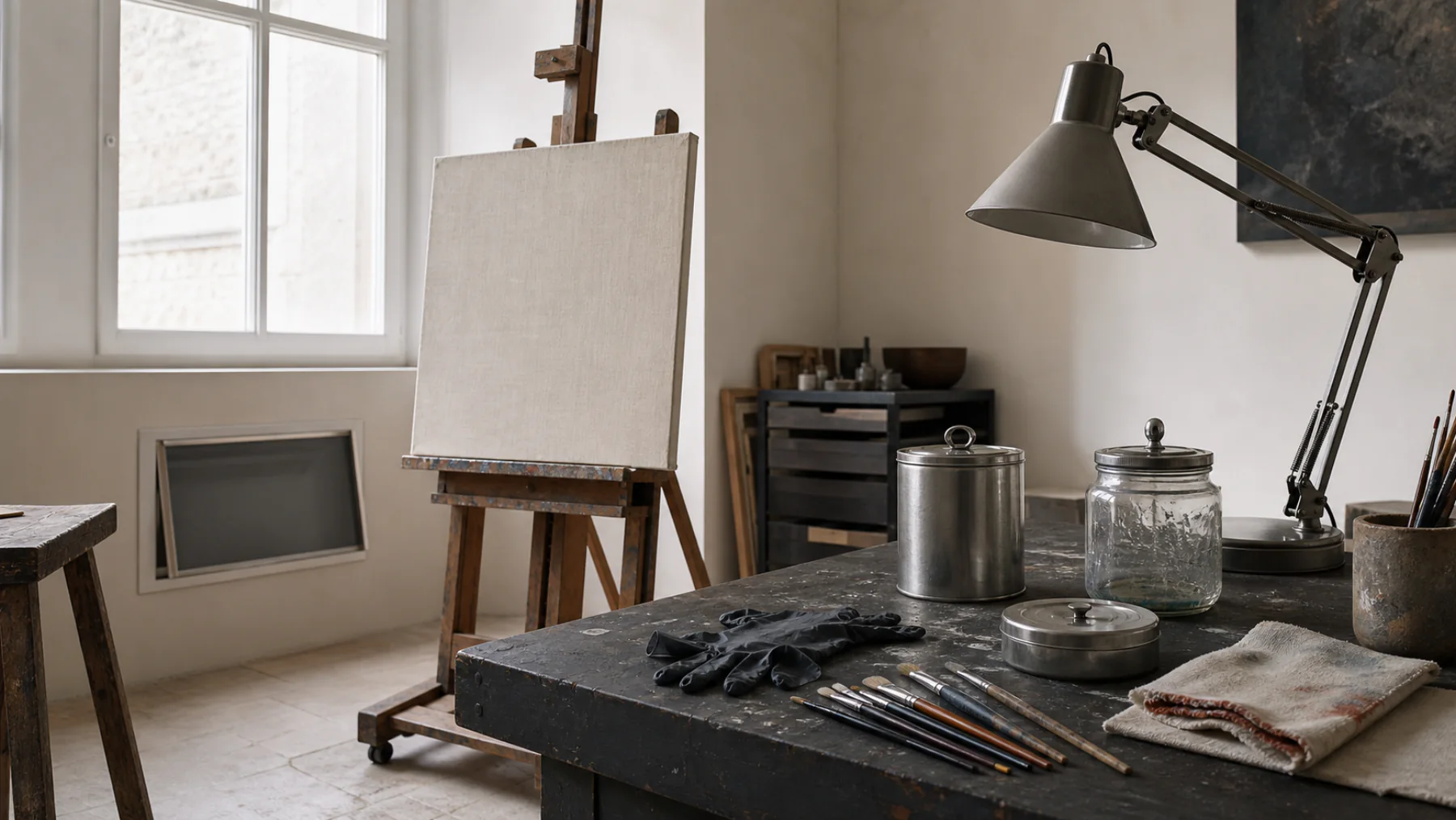
If you have a north-facing window in your studio, it is the best light source you will ever have. Position your easel so the window falls on the painting from the side, slightly above, not behind you. Light from behind the painter throws your shadow on the work.
When you cannot rely on a window
Most artists work in studios where natural light is unreliable, shared, or simply absent. The solution is to choose artificial lighting that mimics daylight as closely as possible. Two numbers tell you almost everything you need to know about a bulb.
Colour temperature
Colour temperature is measured in Kelvin (K) and tells you how warm or cool a light source appears. Lower numbers are warmer (orange-yellow); higher numbers are cooler (blue-white).
- 2700 to 3000K. Warm white. Standard household tungsten or warm LED. Useless for painting. It pulls everything yellow.
- 4000K. Neutral white. Better, but still slightly warm of true daylight.
- 5000K (D50). Daylight white, the colour standard used in printing and colour-critical industries. A solid choice for studios without north-facing windows.
- 6500K (D65). North skylight white. The right match if your studio has indirect daylight from a north-facing window and you want your bulbs to blend with it.
Most working painters settle on 5000K throughout a studio without north light, and 6500K when matching to a north window. Mixing temperatures in one space is confusing; pick one and use it for the whole work area.
CRI: the number that actually matters
Colour temperature tells you how the light looks; the Colour Rendering Index (CRI) tells you how accurately the light reveals the colours in your paint. CRI is reported on a scale to 100, with 100 being perfect daylight.
- CRI 80 to 89. Standard household and office bulbs. Adequate for general living, terrible for painting. They flatten subtle reds and shift cool greys.
- CRI 90 to 94. Acceptable for general painting work. The minimum you should consider for a studio.
- CRI 95 and above. The standard for serious studio work and for photographing paintings. Reds, especially, render accurately.
A separate value worth checking is R9, the score for deep red rendering. Many bulbs claim CRI 95 but score poorly on R9, which means cadmium reds and warm shadows shift unpredictably. For studio bulbs, look for CRI 95+ and R9 80+ together.
Practical setups
A few configurations that work well in real studios:
- Single overhead. One adjustable arm lamp with a daylight LED clipped above the easel. Cheap, portable, fine for one painting at a time.
- Twin clamp lamps. Two articulated lamps either side of the easel, slightly above and angled in. Reduces shadow on a textured canvas surface and gives even illumination across a larger painting.
- Track lighting with PAR bulbs. A short track over the working area with three or four daylight LEDs aimed at the easel and the taboret. Stable, professional, easy to live with long term.
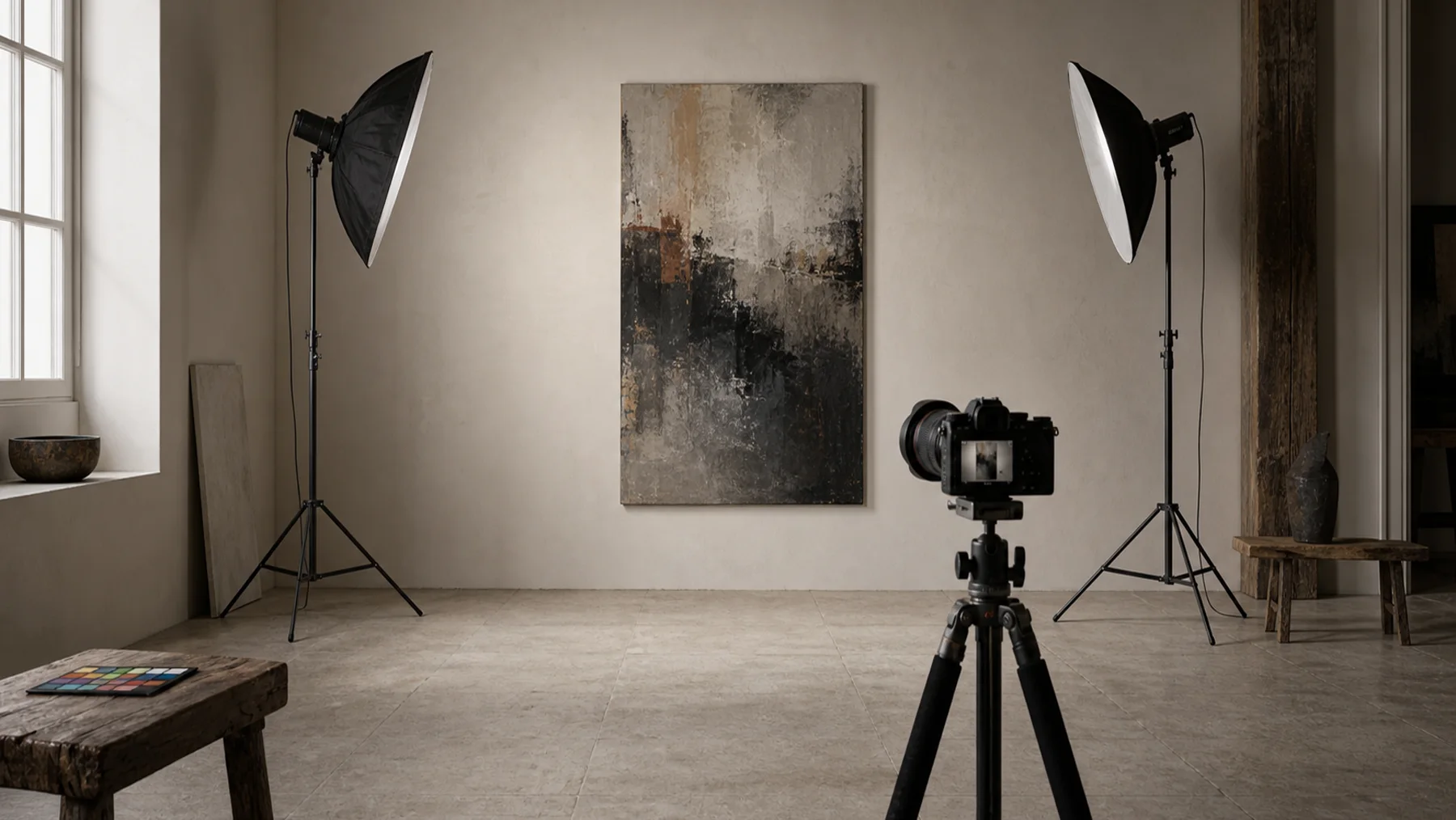
- Photo light box for documentation. A separate lighting setup for photographing finished work. Two daylight floods at 45 degrees on either side of the painting, no other lights on, window light blocked. Use this every time you photograph, and your records will stay consistent across years.
Getting the light off the painting itself
Two practical issues worth solving in any studio:
- Glare. Wet oil paint is highly reflective. Position your light high enough that direct reflection does not bounce into your eye when standing at the easel. A small change in lamp angle can move the glare off the working area.
- Hot spots. Single-source lighting can cause a bright spot in one part of the canvas. Two lights from either side, at equal distance, soften the lighting across the surface.
- Casting your own shadow. Make sure your hand and arm do not block the main light when you reach to paint. A light from the opposite side of your dominant hand prevents this.
Photograph in the same light
If you sell, document, or submit your work, the lighting at the moment of photography matters as much as the lighting while you paint. Mixed lighting (window light plus warm interior bulbs) is the most common cause of bad artwork photographs. The fix is simple: turn off everything except your daylight studio lights, close the curtains if necessary, and shoot every painting under the same setup.
Consistent light gives you consistent images. Consistent images give you a portfolio that holds together visually, PDF catalogues that look professional, and records that future you can rely on.
The short shopping list
If you are setting up a studio from scratch, the minimum investment that meaningfully improves the work:
- Two high-CRI daylight LED bulbs (5000K, CRI 95+, R9 80+).
- Two articulated lamp arms or clamp lamps.
- A neutral-grey or off-white wall behind the easel, so reflected light does not contaminate your colour reading.
- A separate, simple photo lighting setup for documentation, even if it is just two clamp lamps you reposition when needed.
Lighting is the cheapest meaningful improvement most studios can make. The bulbs that matter are not expensive. The difference in your colour mixing, your finished work, and your documentation is significant.
Photograph and store work in consistent light
Artwork Codex stores high-resolution images alongside each artwork record, so you have a permanent reference of how each piece looked at completion.
Paid checkout requires a card. Cancel anytime. The Free plan remains available without a card.
Free plan available. Good light leads to accurate records.