How to Prepare for a Studio Visit
What this helps you do
Make a studio visit easy to understand and easy to follow up.
A studio visit is not a performance, but it is a prepared conversation. Whether the visitor is a collector, curator, critic, advisor, or gallery director, your job is to make the work visible, the context clear, and the next step easy.
At a glance
Key takeaways
- Decide what you want the visitor to understand before choosing the work to show.
- Have the facts ready for the pieces you expect to discuss, without turning the visit into a sales script.
- Send a concise, specific follow-up while the conversation and selected works are still clear.
Decide what the visit is for
A collector visit, curator visit, and gallery visit have different goals. Before the visitor arrives, decide what you want them to understand and what you hope might happen next.
That does not mean forcing the conversation. It means choosing what work to show, what context to prepare, and what follow-up materials might be useful.
Edit the room
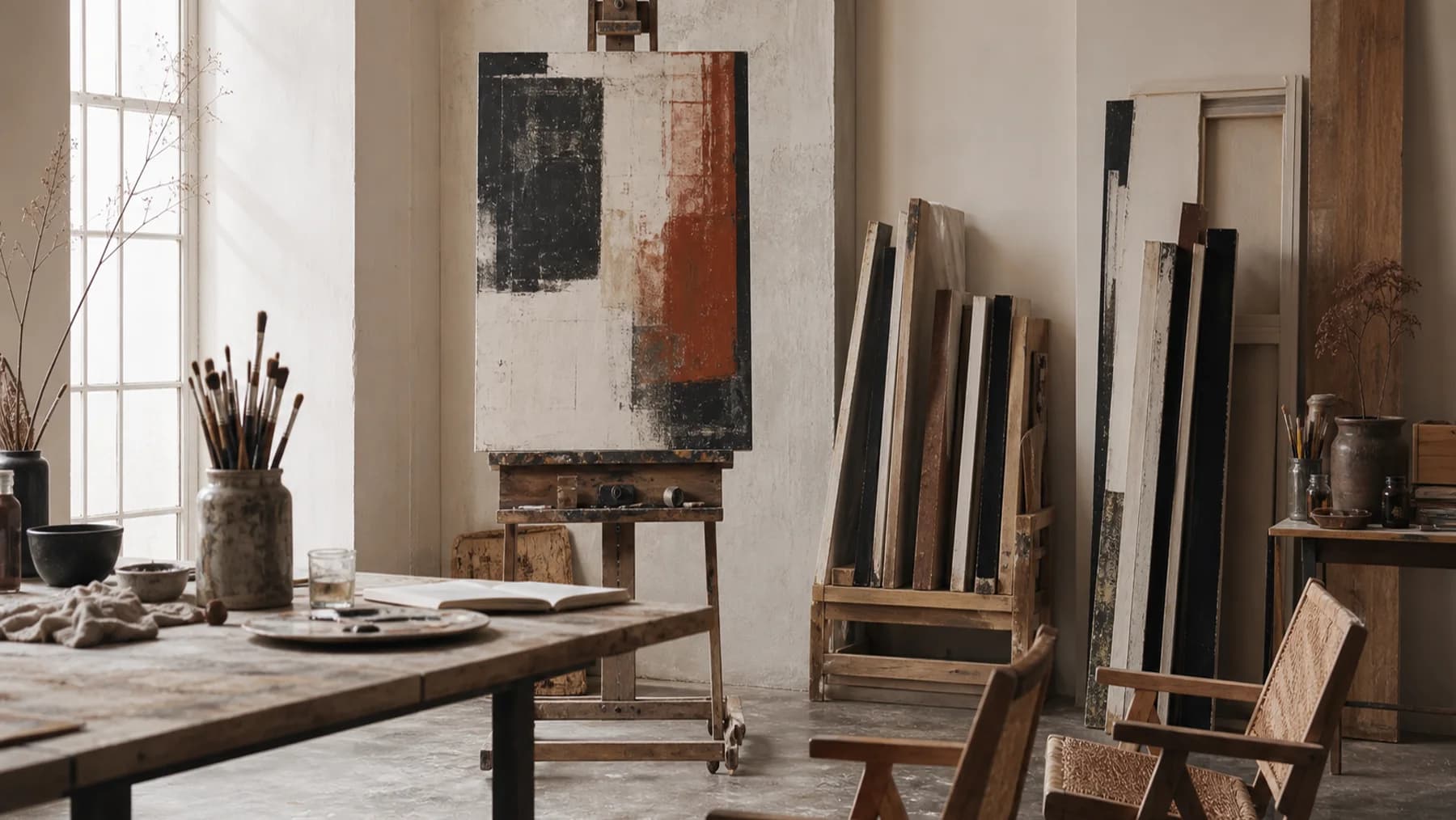
Do not make visitors dig through everything. Put the strongest current work where it can be seen easily. Keep related sketches, studies, or older works nearby only if they help explain the development of the work.
A studio should feel alive, not staged beyond recognition. Still, remove visual clutter that competes with the artwork or makes it hard to move around safely.
Prepare the practical facts
Even if the visit is informal, you should know the basics for each work you plan to discuss: title, year, medium, dimensions, price if available, exhibition status, and whether it is framed, reserved, or sold.
If you do not want to discuss price in the room, prepare a follow-up PDF or private viewing room. The key is not to be caught guessing.
Let the work breathe
Artists often overexplain because silence feels risky. Leave room for the visitor to look. Ask what they want to see more of. Notice which works hold their attention.
A studio visit is a conversation, not a lecture. Have a few clear stories ready, but do not try to deliver your entire practice in one uninterrupted monologue.
Capture useful notes afterward
As soon as the visit ends, write down what happened. Which works did they respond to? What questions came up? Did you promise images, prices, a CV, a catalog, or an introduction?
These notes are easy to skip and hard to reconstruct later. They become the bridge between a warm conversation and a professional follow-up.
Send a focused follow-up
- Thank them for coming.
- Mention one specific thread from the conversation.
- Share only the works or materials they asked for.
- Include clear titles, dimensions, prices, and availability where relevant.
- Record the follow-up date and next action.
Worked example
A thoughtful follow-up
After a curator looks closely at three works from a new series, send a short note the next day with a private link to those pieces, a one-paragraph series context, and any dimensions or installation images they requested.
Walk into studio visits with your records ready
Artwork Codex keeps artwork details, prices, images, collections, PDFs, and viewing rooms ready so you can follow up after a visit without rebuilding everything from scratch.
Paid checkout requires a card. Cancel anytime. The Free plan remains available without a card.
Free plan available. Useful records make good conversations easier to continue.