Artwork Condition Reports: A Simple Guide for Artists
What this helps you do
Record condition clearly before a work moves or changes hands.
A condition report records what an artwork looks like at a specific moment. It is not only for museums. Artists benefit from condition reports whenever work is shipped, consigned, stored, exhibited, framed, restored, or sold. The report does not need to be complicated. It needs to be consistent and honest.
At a glance
Key takeaways
- Make a dated written and photographic record before a work travels, is consigned, or enters long-term storage.
- Describe what you can observe, not the cause of damage you cannot verify.
- Keep the report with the artwork record, shipping paperwork, and handover messages so it can be compared later.
When to make a condition report
Create a report whenever a work leaves your control or changes state. Before shipping, before gallery consignment, before a fair, before a loan, after framing, after return from exhibition, and before long-term storage are all sensible moments.
You do not need to report on every sketch in a drawer. Focus on works that are sold, available, valuable, fragile, framed, or moving between people.
Photographs matter more than elegant prose
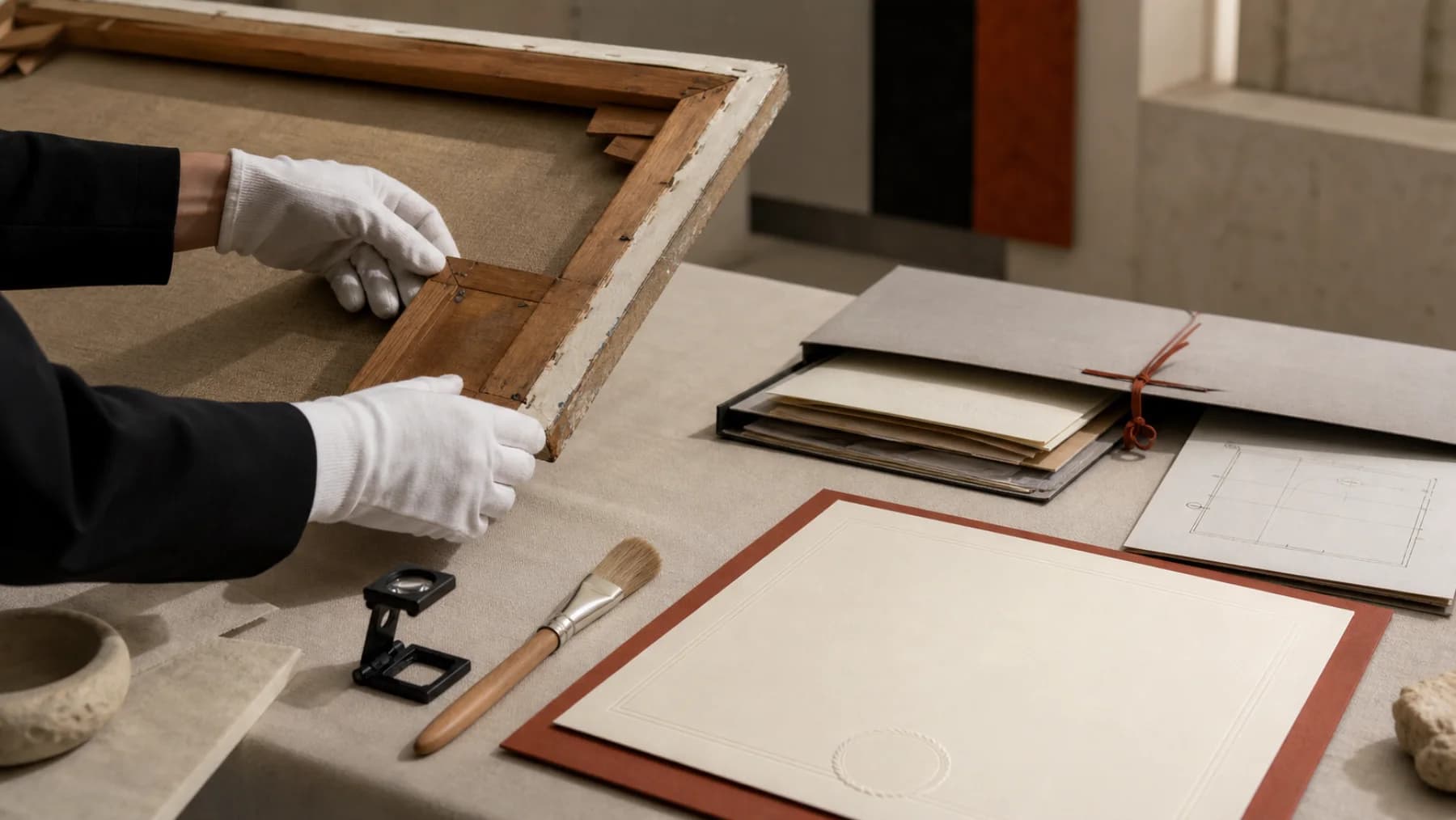
Take clear photos in steady light: front, back, corners, frame, signature, labels, surface details, and any existing damage. For textured work, side light can reveal surface issues that straight-on images hide.
Name or store the images so they remain connected to the artwork and date. A condition photo with no artwork code and no date loses much of its value.
Use plain condition language
Condition language should be direct and observable. Avoid dramatic guesses. Write what you can see: small abrasion at lower left edge, minor frame scuff on right side, slight paper wave near top margin, no visible surface damage.
If you are not a conservator, do not pretend to diagnose. It is fine to say that the cause is unknown. The report is a record, not a performance of expertise.
- Artwork title and inventory number
- Date of report
- Current owner or studio
- Current location
- Framed or unframed state
- Overall condition summary
- Specific notes by area
- Photographs attached
- Name of the person making the report
Compare before and after
Condition reports become most useful in pairs. A report before shipping and a report after unpacking can show whether a problem was pre-existing or happened in transit. The same is true for loans, fairs, and consignments.
Make the receiving party confirm condition if possible. Even a short email saying received in good condition gives you a useful record.
Connect the report to other records
A condition report should not sit alone. It belongs with the artwork record, shipping paperwork, consignment agreement, insurance details, framing invoice, and sales record if the work is sold.
This is where artists often lose time. The report exists, but it is in one folder, the images are on a phone, and the shipping label is in email. Keeping them connected turns fragments into documentation.
A lightweight studio version is enough
Do not wait until you have a museum template. A one-page report with clear photographs is far better than no report. Consistency matters more than polish.
Once the habit exists, you can refine it. The goal is to know what condition the work was in before it moved and to have enough evidence to support a clear conversation if something goes wrong.
Worked example
A useful condition note
Instead of writing 'damaged corner', write 'small abrasion, approximately 4 mm, on lower left canvas edge; visible in detail image 04'. The description tells a future reader where to look without guessing how it happened.
Sources and further reading
Keep condition notes attached to the artwork
Artwork Codex stores images, notes, documents, locations, and sales records on each artwork so condition information does not disappear into email threads.
Paid checkout requires a card. Cancel anytime. The Free plan remains available without a card.
Free plan available. Better records make every future handoff easier.