Hot Press vs Cold Press Watercolour Paper: A Complete Guide
What this helps you do
Choose a paper surface that suits the marks you want to make.
Watercolour paper is one of the few materials where the substrate is half the painting. Surface texture, weight, sizing, and fibre all affect how the pigment moves, how edges form, and how the work ages. Here is a clear, practical guide to the differences between hot press, cold press, and rough papers, and how to pick the one that suits your subject.
The three surfaces
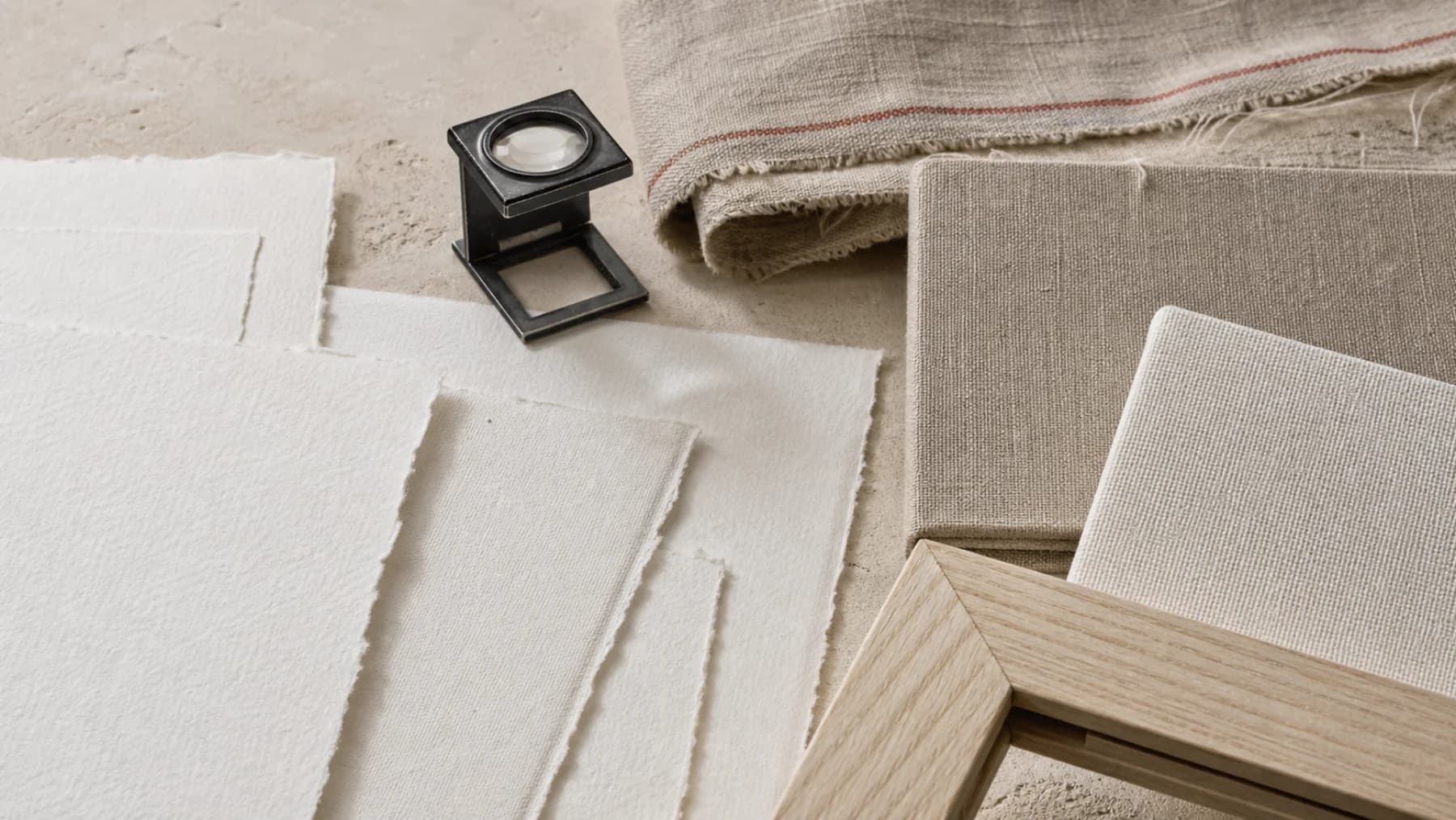
Watercolour paper is sold in three surface grades. The names come from the manufacturing process, but what matters in practice is the texture and how it interacts with the brush.
- Hot pressed (HP). Smooth surface, almost no tooth. Made by pressing the paper between heated rollers. Pigment sits on the surface, washes stay open longer, and edges can be very sharp. Best for fine detail, botanical illustration, portraiture, and pen-and-wash work.
- Cold pressed (NOT, in Europe). Slight pebbled texture. Made without heat, which leaves a more irregular surface. The most versatile grade and the one most painters reach for. Holds water well, granulates pigments beautifully, and forgives less precise brushwork.
- Rough. Pronounced tooth with visible peaks and valleys. Holds the most water, produces dramatic granulation, and gives broken edges that suit landscape, seascape, and atmospheric work. Brushstrokes are harder to control and the texture stays visible in the finished painting.
How surface affects the painting
The texture of the paper controls three things you care about when you are painting:
- Absorbency. Cold press absorbs water faster than hot press, which means pigment sets in place more quickly. On hot press, washes stay wet longer, giving you more time to push paint around but also more time for backruns to form if you are not careful.
- Edge quality. Hot press produces the cleanest, sharpest edges. Cold press gives a slightly broken edge as pigment settles into the valleys of the surface. Rough exaggerates the broken edge into something almost impressionistic.
- Granulation. Pigments like ultramarine, cerulean, and the umbers separate into visible particles as they dry, especially on textured paper. Cold press and rough show this clearly. Hot press mostly hides it.
A useful rule: if your subject relies on precision (a bird's eye, a leaf vein, a face), reach for hot press. If it relies on atmosphere (a foggy harbour, a wet street, a distant mountain), reach for cold press or rough.
Weight and what it means
Watercolour paper weight is reported in grams per square metre (gsm) or pounds per ream (lb). The two correspond closely enough that most painters learn one set of numbers.
- 190 gsm (90 lb). Lightweight. Useful for sketching and studies. Buckles heavily under wet washes unless stretched first.
- 300 gsm (140 lb). The industry standard. Handles most wet work without buckling badly. Good balance of cost and performance.
- 425 gsm (200 lb) and 640 gsm (300 lb). Heavyweight. Behaves almost like a board. Takes very wet techniques without warping. More expensive and harder to mount in a frame.
For most working watercolourists, 300 gsm cold press is the baseline paper. You can always step up in weight or texture for a specific painting, but starting on a lightweight paper for a serious piece is rarely worth the saving.
Cotton and cellulose
The other axis to pay attention to is fibre content.
- 100 percent cotton. Long fibres, durable, high absorbency, lifts pigment cleanly, and ages well. The standard for finished work intended to sell. Brands include Arches, Saunders Waterford, Hahnemühle The Collection, and Fabriano Artistico.
- Cellulose (wood pulp). Cheaper, often more uniform, but typically less responsive to lifting and less archival. Fine for studies, sketchbooks, and learning. Brands include Canson XL, Hahnemühle Cézanne, and most student-grade pads.
The difference is most obvious in lifting and reworking. Cotton paper lets you lift dry colour back to nearly white with a damp brush; cellulose papers tend to grey out and stain. For finished work that will sell, cotton is worth the premium.
Sizing
Sizing is the gelatine or starch coating that controls how much water the paper absorbs. It is the unsung variable of watercolour paper. Heavily sized papers (most professional cottons) keep pigment near the surface, allow lifting, and produce more luminous washes. Lightly sized or unsized papers drink the pigment in and make lifting nearly impossible.
You cannot read sizing from the label, but you can feel it. Drop a single drop of clean water on the paper. If it beads briefly before soaking in, the paper is well sized. If it disappears instantly, the sizing is light. This affects your washes more than most painters realise.
Stretching paper
Anything lighter than 300 gsm benefits from stretching before a wet painting. Soak the paper in cool water for several minutes, lay it flat on a board, and tape down the edges with gummed paper tape (not masking tape, which lifts when wet). As the paper dries, it pulls itself taut. The result is a flat surface that takes wet washes without buckling.
For 300 gsm and above, stretching is optional. Many painters simply tape the corners with low-tack artist tape or work in a watercolour block (a pad glued on three or four sides), which holds the paper flat enough to keep buckling within tolerable limits.
Choosing for the work
A simple decision tree most watercolourists can use:
- Botanical, portrait, illustration. 300 gsm hot press, 100 percent cotton.
- General studio work, mixed subjects. 300 gsm cold press, 100 percent cotton.
- Atmospheric landscape, seascape. 300 gsm rough, 100 percent cotton, or 425 gsm cold press for very wet techniques.
- Sketchbook practice, studies. 190 to 300 gsm cellulose pads. Save the cotton for finished pieces.
Buy a single sheet of two or three candidate papers, divide each in half, and run the same three tests on each: a flat wash, a wet-into-wet bleed, and a dry-brush passage. The differences will tell you more than any review.
Note the paper, weight, and brand for every painting
Artwork Codex makes it simple to record support details alongside your watercolour inventory, so you can look back and see which papers produce your strongest work.
Paid checkout requires a card. Cancel anytime. The Free plan remains available without a card.
Free plan available. Material records pay off across decades.