How to Frame Artwork: A Conservation Framing Guide for Artists
What this helps you do
Brief a framer clearly and choose materials appropriate to the work.
Framing is the part of selling artwork most artists outsource without thinking carefully about it. That is reasonable when the framer is good. It is a problem when they are not. Cheap mats, ordinary glass, and acidic backing boards can damage a piece in a few short years, and most of the damage is invisible until it is too late. Here is a clear, practical guide to framing artwork well, whether you are doing it yourself or briefing a professional.
What conservation framing actually is
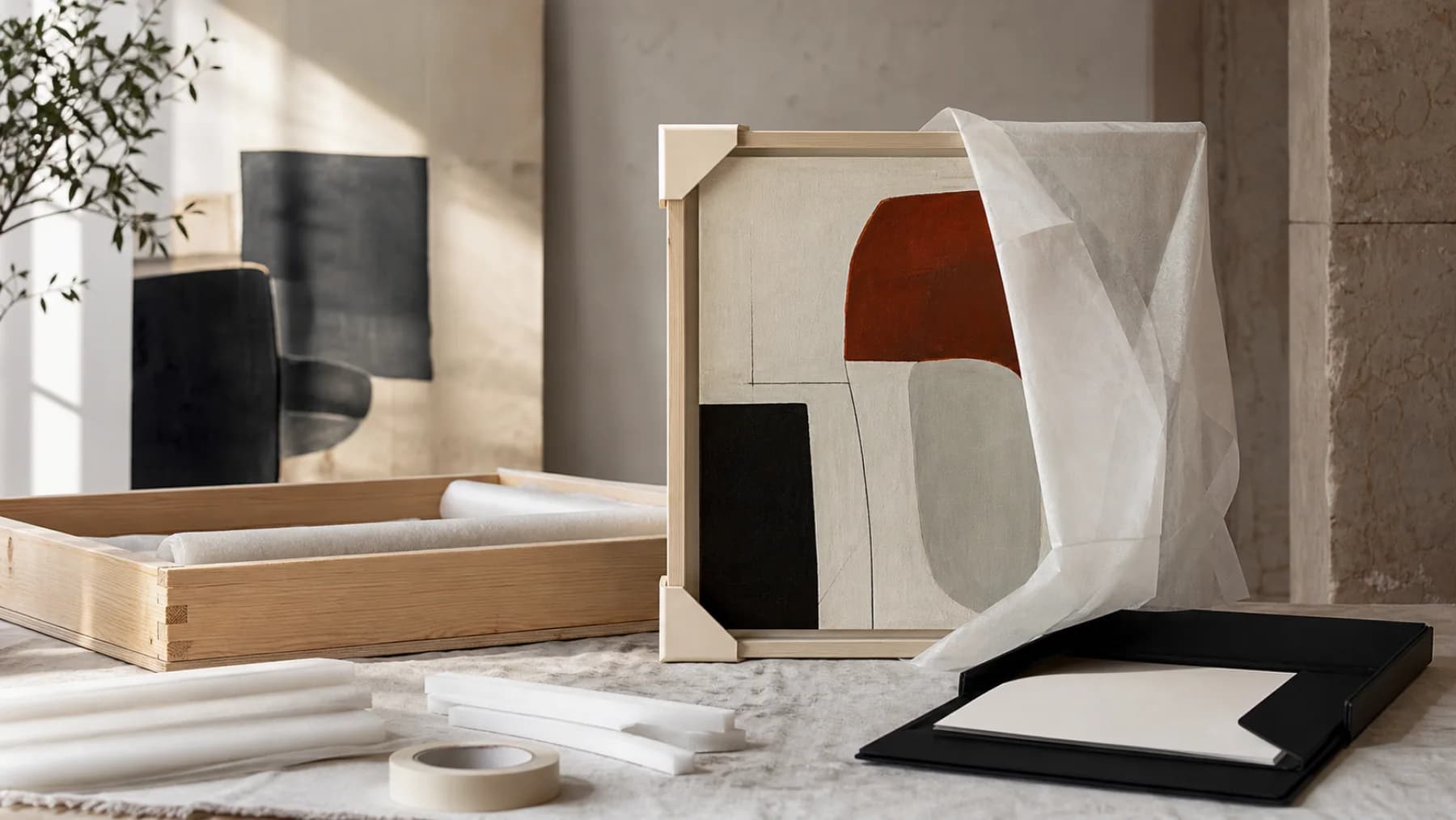
Conservation framing is a framing approach designed to do the least possible harm to the work over the longest possible time. Every material that touches the artwork is chosen for chemical stability and reversibility. Anything done to the piece (mounting, hinging, sealing) should be undoable in the future without leaving a trace.
The four core principles in plain language:
- Nothing acidic touches the work. Acid migrates from one material to another and yellows or weakens paper over time.
- UV light is blocked or reduced. Light damage is the most common cause of fading and discolouration in framed work.
- The artwork never touches the glazing. Direct contact between paper and glass invites condensation, mould, and the artwork sticking to the glass.
- Mounting is fully reversible. Hinges, corner pockets, and Mylar sleeves should all be removable without damaging the work.
Mat board: what to look for
The window mat is the most direct contact your artwork has with framing materials, and it is where most cheap framing goes wrong.
- Standard pulp mats. Cheap, made from wood pulp, naturally acidic, and they yellow rapidly. They will visibly stain artwork in a few years. Acceptable for posters and decorative prints, never for original artwork or limited-edition prints.
- Acid-free pulp mats. Wood pulp that has been buffered with calcium carbonate to neutralise acid. Better than standard pulp but still degrade over decades.
- Conservation mats. Made from purified alpha cellulose, acid-free, lignin-free, buffered. Suitable for almost all original artwork and good for sustained use.
- Museum mats (100 percent cotton rag). The standard for permanent collections and high-value work. Made from cotton fibre, fully archival, and stable for hundreds of years under normal conditions.
For original work that you sell, the minimum is conservation grade. For anything you would put on a museum or institutional wall, choose 100 percent cotton rag. The price difference is modest and the protection is significant.
Glazing: glass or acrylic
The glazing is the transparent material that covers the artwork. The choice involves three properties: clarity, UV protection, and weight.
- Standard glass. Inexpensive, but reflective and offers no UV filtering. Suitable for poster framing, not recommended for original work.
- UV-filtering glass. Blocks roughly 97 to 99 percent of UV. The minimum recommended for framed artwork. Brand names include Tru Vue Conservation Clear and Artglass UV.
- Anti-reflective UV glass. Same UV protection but with a coating that dramatically reduces reflection. Tru Vue Museum Glass and Artglass AR99 are the common professional options. The difference at a gallery wall or in low light is striking.
- Acrylic glazing (sometimes called Plexiglas or Optium). Lighter than glass (essential for very large works), and available with UV filtering and anti-reflective coatings. Slightly softer than glass and prone to scratching, but safer for shipping because it does not shatter.
Note: do not use any acrylic glazing on pastels, charcoals, or unfixed graphite. Acrylic carries an electrostatic charge that can pull pigment particles off the surface. Use glass for those works.
Spacers and why they matter
Artwork should never sit directly against the glazing. Two things go wrong when it does. Condensation forms at the glass and transfers to the work, leading to mould or foxing. Pigments and inks can fuse to the glass over time, especially in inkjet prints, and become impossible to separate without destroying the surface.
A mat solves this naturally because the mat itself acts as a spacer. For frames without a mat (a float-mounted print, for example), use proper acrylic or fillet spacers between the glazing and the work, hidden behind the rebate of the frame.
Hinges and mounting
Works on paper should be held in the frame using reversible, archival hinges, not glued or taped down across the entire back.
- Japanese paper hinges attached with starch paste are the traditional standard. Strong enough to hold the work, removable with moisture if ever needed.
- Photo corners (acid-free) hold the work without any adhesive contact. Suitable for unmatted prints and photographs.
- Mylar sleeves are useful for fragile or pastel work; the artwork sits inside a clear archival pocket that is itself attached to the backing.
- Pressure-sensitive tape (Scotch, masking, double-sided) should never touch artwork. The adhesive yellows, migrates, and is often impossible to remove without tearing the paper.
Backing and dust seal
Behind the artwork, the backing board is what protects against flexing and contamination from the frame itself. Choose:
- Acid-free foam board as the primary backing layer touching the work. Lightweight and inert.
- A barrier or corrugated archival board behind the foam to add rigidity for larger frames.
- A dust seal (paper or framing tape) across the back of the frame to keep insects, dust, and pollutants out.
Avoid hardboard (Masonite) and untreated wood backings in direct contact with the artwork. They release acidic gases and can stain over time.
Stretched paintings on canvas
Oil and acrylic paintings on stretched canvas do not need glazing. The frame is mostly aesthetic and protective. A few principles:
- Use a floater frame (where a small gap surrounds the canvas edge) for contemporary work, or a traditional rebate frame with appropriate offset for representational work.
- Make sure the frame depth accommodates the stretcher bar with a few millimetres of clearance, so the canvas is not pressed against the rebate.
- Attach the painting to the frame using offset clips or screws into the stretcher bar, not into the painting itself.
- Add a backing board behind the painting (foam board or corrugated archival board) to protect against punctures and reduce dust accumulation.
Briefing a framer
When you bring a piece to a frame shop, four short questions tell you whether they are doing the work properly:
- What grade of mat board do you use? You want conservation or 100 percent cotton rag.
- What glazing do you offer? You want UV-filtering glass or acrylic at minimum.
- How will the work be hinged? You want reversible methods (Japanese paper, photo corners, Mylar).
- Will you seal the back? You want a dust seal of paper or tape, with a foam or archival backing layer.
A reputable frame shop will answer these readily and may have questions of their own about the work. A shop that hesitates or upsells decorative options without addressing the conservation questions is the wrong shop for original work.
What to record on the inventory
When a piece is framed, note alongside the artwork record:
- The frame profile and finish.
- Mat type (conservation, museum, double-mat, no mat).
- Glazing type (UV glass, museum glass, UV acrylic).
- Whether the piece is hinged and how.
- The date framed.
- The framer's name, if outsourced.
A framed piece is a small system, and the documentation of that system protects the work for as long as it lives in someone's collection. Five lines of notes per painting, and decades of confidence about how the piece was actually presented.
Record framing details with each finished piece
Artwork Codex stores condition, framing, and provenance notes alongside each artwork, so the trail of how a piece is presented stays with the inventory.
Paid checkout requires a card. Cancel anytime. The Free plan remains available without a card.
Free plan available. Records that follow the painting protect everyone.