The Pros and Cons of a Limited Palette in Oil Painting
What this helps you do
Use palette constraints deliberately, then record what worked.
A limited palette is one of the oldest disciplines in oil painting, and one of the most useful. Working with three or four pigments forces you to mix more carefully, see color relationships more accurately, and produce a more unified painting. It also has real drawbacks. Here is a clear look at both sides, and how to decide whether a limited palette belongs in your practice.
What counts as a limited palette
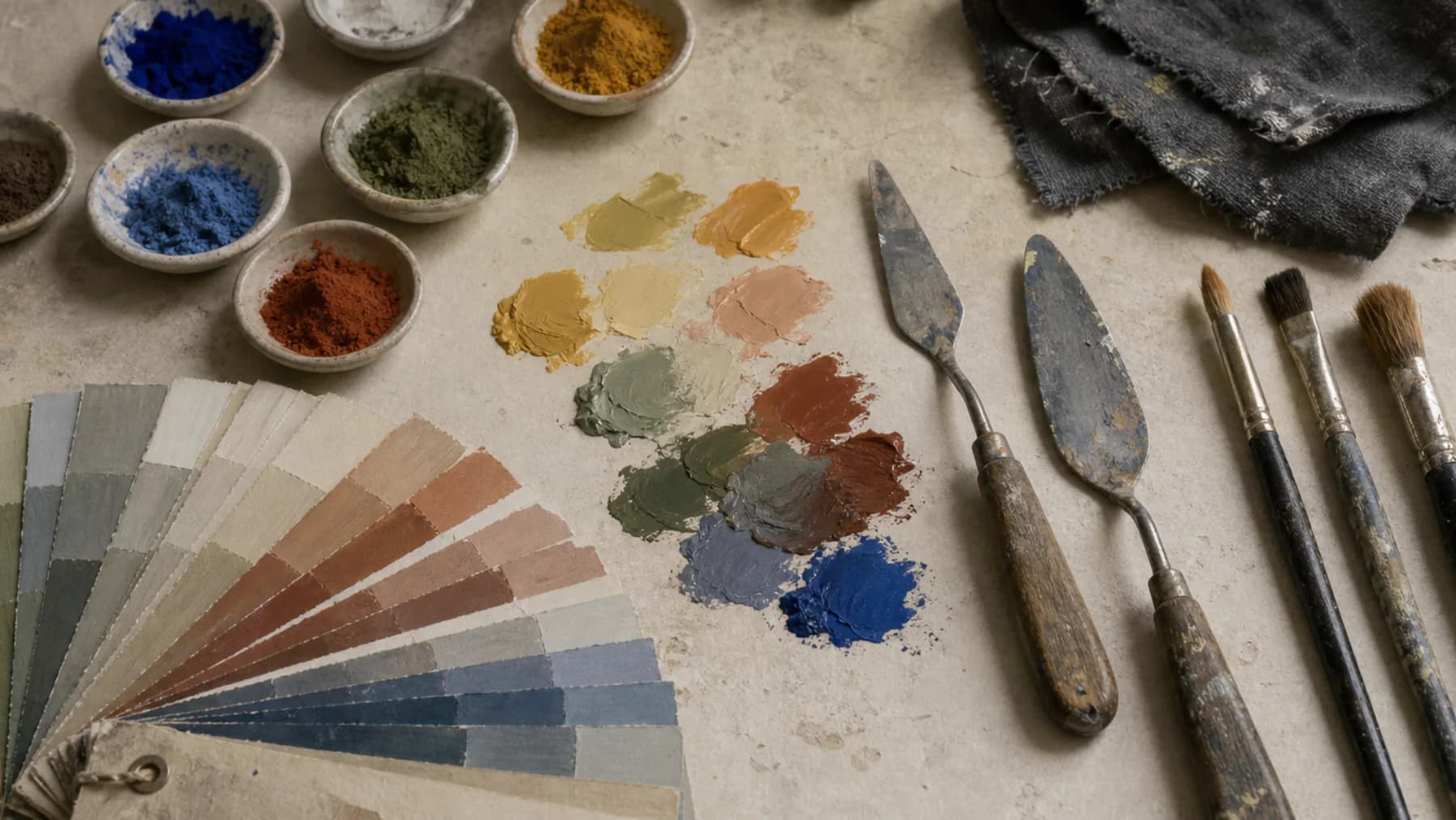
A limited palette is any deliberate restriction of the number of pigments on your taboret. The classic definitions vary, but most working painters use the term to mean somewhere between three and seven tubes. Anything beyond that tends to behave more like a full palette with discipline.
The most common limited palettes you will encounter:
- Zorn palette. Yellow ochre, ivory black, vermilion (or cadmium red light), and titanium white. Famous for portraits and figures.
- Earth palette. Yellow ochre, burnt sienna, raw umber, ivory black, and titanium white. Warm, low chroma, well suited to landscape and tonal work.
- Split primary palette. A warm and cool version of each primary, plus white. Six tubes that still mix almost anything.
- Quiller-style triad. Three pigments chosen to sit at the corners of a colour wheel triangle, intentionally limiting the gamut for compositional harmony.
Why painters use them
The first thing a limited palette does is force you to mix. You can no longer reach for a tube every time you need a particular green or purple. You have to look at what you have, identify the closest base, and shift it. That habit is the single biggest reason artists keep coming back to limited palettes.
A few specific benefits worth naming:
- Colour harmony. Every mixture shares the same parent pigments, so the painting locks together visually. Even bad passages tend to feel like part of the same world.
- Faster decisions. Fewer tubes means fewer choices to make in front of the canvas. You spend less time hunting and more time painting.
- Stronger value structure. Limited palettes encourage thinking in lights and darks first, colour second. That tends to produce more legible paintings.
- Economy. Three or four tubes used heavily are cheaper than fifteen tubes used lightly, and they finish before they go off.
- Skill development. You learn pigments deeply rather than superficially. After a year on a Zorn palette, you know exactly how ivory black behaves with yellow ochre at every ratio.
Where the approach falls short
Limited palettes are not a silver bullet. They restrict your colour gamut by definition, and that matters more for some subjects than others.
- High chroma is hard. A Zorn palette cannot produce a saturated cobalt blue or a bright phthalo green. If your subject relies on those notes, the palette will fight you.
- Some greens are difficult. Earth palettes mix muted, natural greens beautifully but struggle with the acid greens of new spring foliage without a dedicated blue or green pigment.
- Skin tones can drift. Without a true blue, certain cool half-tones in fair skin become harder to land.
- Risk of monotony. If you stay on the same limited palette for years, your work can start to look samey. The discipline that helps early can become a rut later.
How to choose a palette for your subject
The pigments you remove matter more than the pigments you keep. Before settling on a palette, look at the colour gamut your subject actually requires. A useful exercise: lay down a small mixing chart with the candidate pigments and check whether you can match the three or four most extreme colours in your reference. If you can get within a reasonable distance, the palette is workable. If you cannot come close, swap a pigment.
A few rough guidelines from working painters:
- For interior portraiture in warm light, Zorn or earth palettes are often enough.
- For overcast landscapes, an earth palette plus ultramarine blue covers most situations.
- For bright, saturated work (florals, sunlit landscapes, still life with plastic), use a split primary palette rather than a true limited palette.
A practical compromise
Many experienced painters work with what could be called a flexible limited palette. They commit to a small core (often four pigments plus white) for a full painting session or series, and only add a fifth or sixth tube for a specific passage they cannot otherwise reach. This keeps the harmony of a limited palette while preserving the option to extend it when the subject genuinely demands it.
A good rule: any pigment that earns a permanent spot on your taboret should appear in at least one mixture in every painting. If you have a tube you reach for once a month, it does not belong in your limited palette.
Record what you used
The most useful thing you can do as you experiment with palettes is write down which one produced each painting. After a year you will start to see patterns. Certain palettes produce your strongest studio work; others suit plein air; others sit unused. Without records, those patterns stay invisible.
A short note on the back of the painting, in your inventory, or alongside your reference photos is enough. Pigments, medium, ground, and surface. When you go back six months later wondering why a particular painting feels right, the answer is usually in those notes.
Track the palette behind every finished painting
Artwork Codex lets you record materials, mediums, and notes for each piece, so you can look back and see which palettes produced your strongest work.
Paid checkout requires a card. Cancel anytime. The Free plan remains available without a card.
Free plan available. Useful for studio painters from day one.