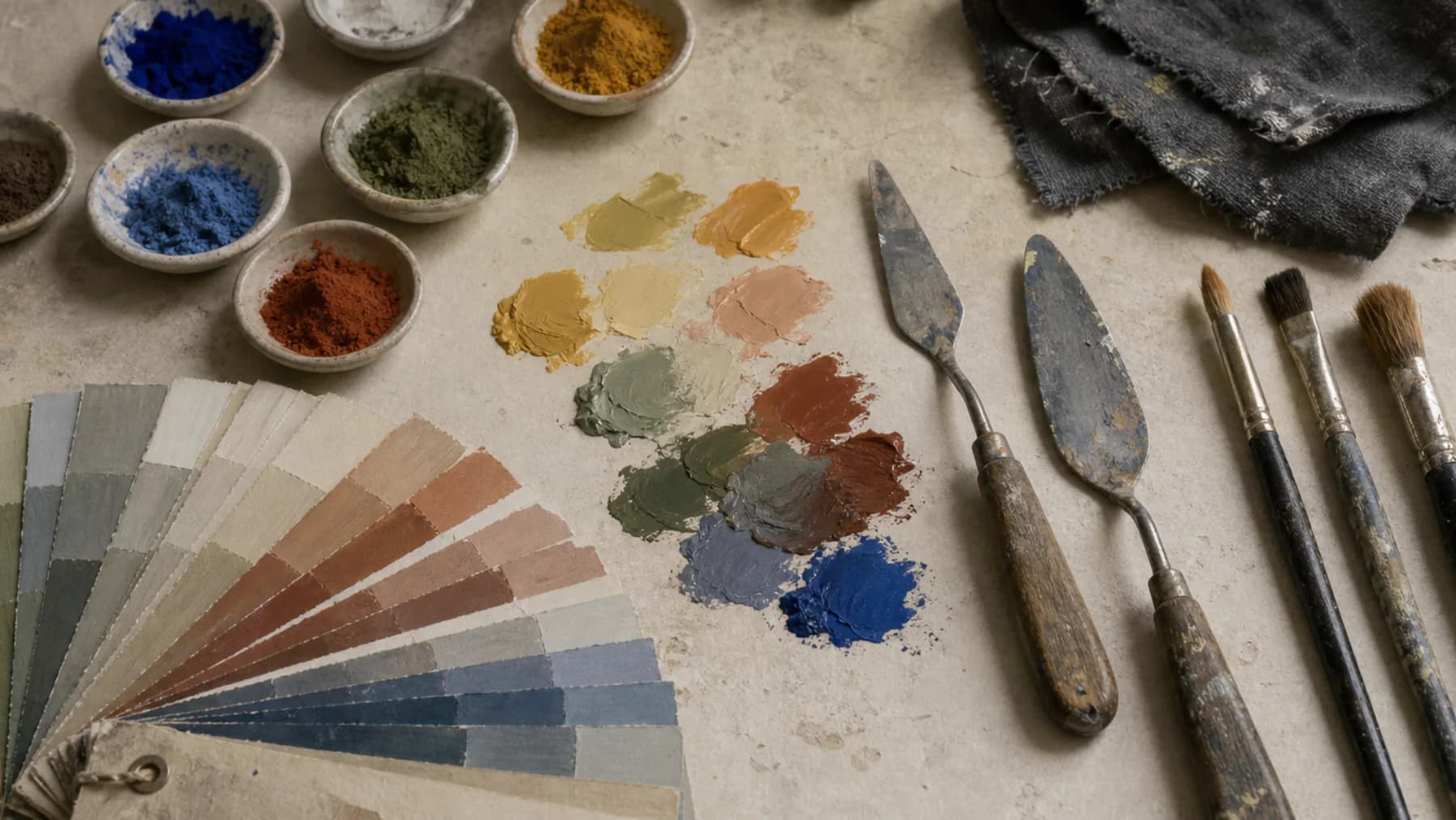
Linen vs Cotton Canvas: Which to Choose for Your Practice
What this helps you do
Choose a support that fits your handling, scale, and budget.
The canvas you paint on is the part of the painting buyers never see and conservators always notice. It influences how your brush feels, how your color reads, and how the painting will hold up over decades. Here is a practical look at linen and cotton, what each is good for, and how to choose without overthinking it.
The short version
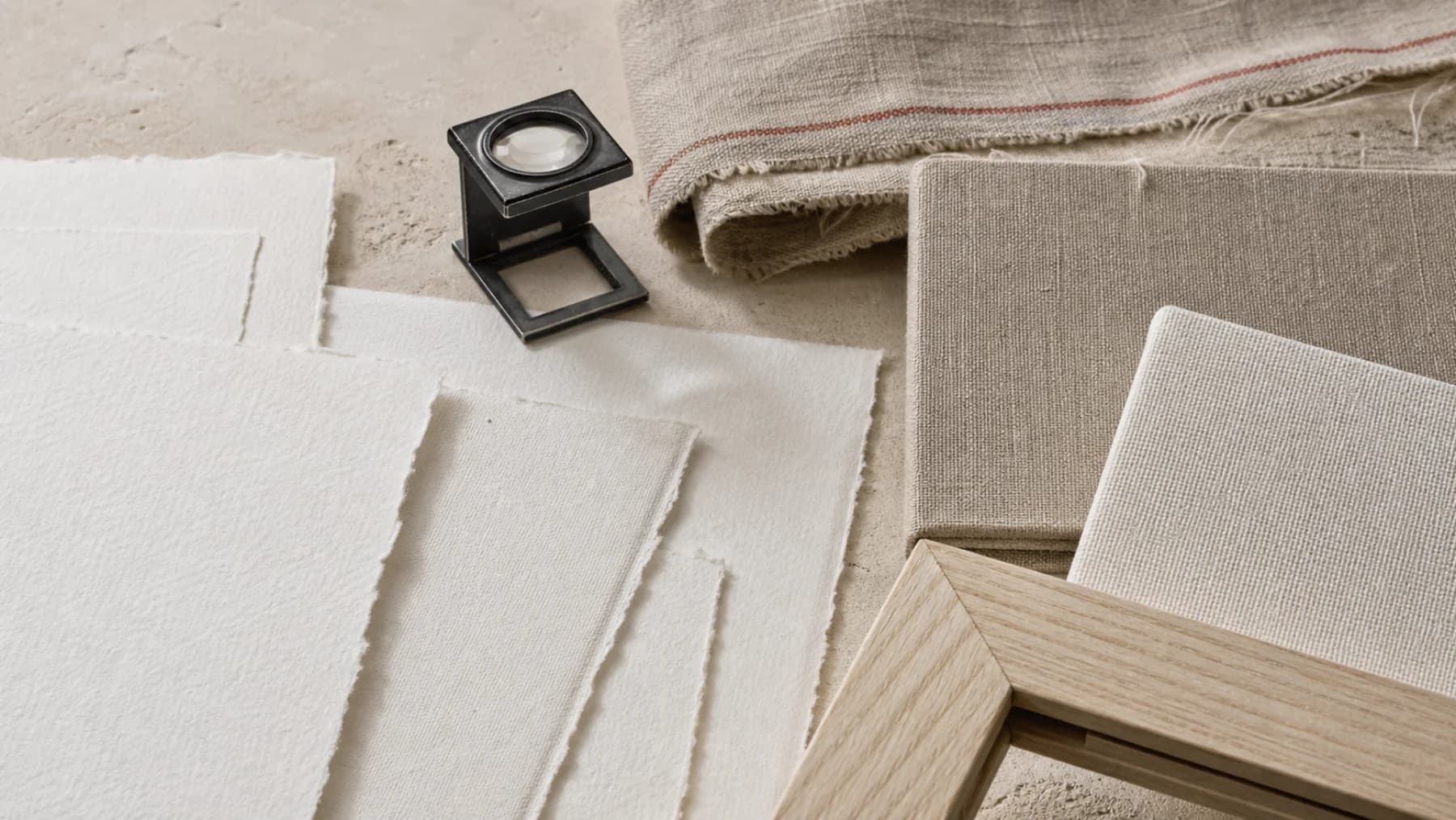
Linen is stronger, ages more gracefully, and has a more refined surface. Cotton is cheaper, more uniform, and easier to source. Both can produce excellent paintings. The right choice depends on how the work will be used, how long it needs to last, and how the surface affects your mark-making.
Linen: the case for it
Linen is woven from flax. The fibre is naturally longer and stronger than cotton, which gives the canvas several advantages that matter for serious work:
- Stability. Linen expands and contracts less with humidity than cotton. That means fewer micro-stresses on your paint film over the years.
- Strength. The longer fibre resists punctures and re-stretching far better. A century from now your linen painting can still be lined or restretched.
- Surface variety. Linen comes in a wide range of weaves, from very fine portrait grade to coarse landscape weights. Each gives a different relationship between the brush and the cloth.
- Tooth that holds paint. The natural irregularity of linen catches pigment differently from mechanically uniform cotton. Many painters find their work feels more alive on linen without being able to fully explain why.
The downsides are real. Linen is expensive, often three to five times the price of cotton at comparable weights. It is harder to stretch (the weave fights you), and the colour and weave can vary from roll to roll.
Cotton: the case for it
Cotton duck is the workhorse of contemporary painting. There is nothing wrong with it as a support, and many serious paintings live on cotton.
- Affordable. Lets you paint at scale, work fast, and experiment without anxiety about wasting an expensive support.
- Uniform. The weave is very consistent, which suits painters who want a neutral surface that does not impose its own texture.
- Easy to stretch. Forgiving for self-stretchers and easy to source pre-stretched in standard sizes.
- Suitable for acrylics. Acrylic paint sits well on cotton, and acrylic gesso reinforces the fibre against the moisture issues that affect oil painters.
The trade-offs come at the long end. Cotton is more dimensionally unstable than linen, which means it moves more with humidity and is more vulnerable to slack stretchers and corner cracks over decades. Lower-grade cotton ducks can also have weak fibres that age poorly.
How to read a canvas
When you are looking at a roll or a pre-stretched canvas, three things tell you most of what you need to know:
- Weight. Usually given in ounces per square yard or grams per square metre. A medium weight is around 7 to 12 oz for cotton and 10 to 14 oz for linen. Heavier supports take more punishment but are slower to stretch tight.
- Weave. Hold the canvas up to a window. A tight, even weave with no slubs is portrait grade. A more open weave with visible irregularity is a landscape or rough grade.
- Priming. Oil-primed, acrylic-primed (often called universal), or unprimed. Oil grounds give a different feel under oil paint than acrylic grounds. Acrylic grounds are necessary if you ever want to paint in acrylic on the same support.
Priming considerations
Whatever cloth you choose, the ground matters as much as the fibre. A few notes:
- Oil grounds on linen are the traditional combination for oil painting and have the longest track record for durability.
- Acrylic grounds (acrylic gesso) work on both linen and cotton, are more flexible, and can be used under acrylic or oil. They are not true gesso in the historical sense.
- Unprimed canvas is fine to buy, but raw cotton or linen needs to be sized before priming or you risk the oil rotting the fibre over time. Modern acrylic gesso includes a sizing layer of sorts, but traditional rabbit skin glue or PVA size is still used by archival-minded painters.
- Multiple thin coats of ground produce a better surface than one thick coat. Sand lightly between coats if you want a smoother tooth.
Choosing for the work
A simple decision tree most painters can use:
- Studies, sketches, large experimental work. Cotton. The cost lets you work freely.
- Finished work for sale, smaller scale. Linen, especially for portraits and detailed subjects where the weave affects the read of the surface.
- Large finished work. Either, with a preference for linen if the painting is intended to last and the budget allows. Heavyweight cotton with a well-applied ground is a perfectly defensible choice.
- Acrylic painting. Cotton is fine. Linen is rarely worth the premium for pure acrylic work.
Record what is under the paint
Make a habit of noting the support and ground for every finished painting. Brand, weight, weave, primer type. It takes ten seconds and pays back many years later when a conservator, insurer, or buyer asks. The information is also useful to you. After fifty paintings you will see clearly which combinations produced the work you are happiest with.
Note the support you used on every painting
Artwork Codex makes it easy to record support, ground, and dimensions for each work, so you build a permanent material record alongside your inventory.
Paid checkout requires a card. Cancel anytime. The Free plan remains available without a card.
Free plan available. Five minutes to set up, useful for life.