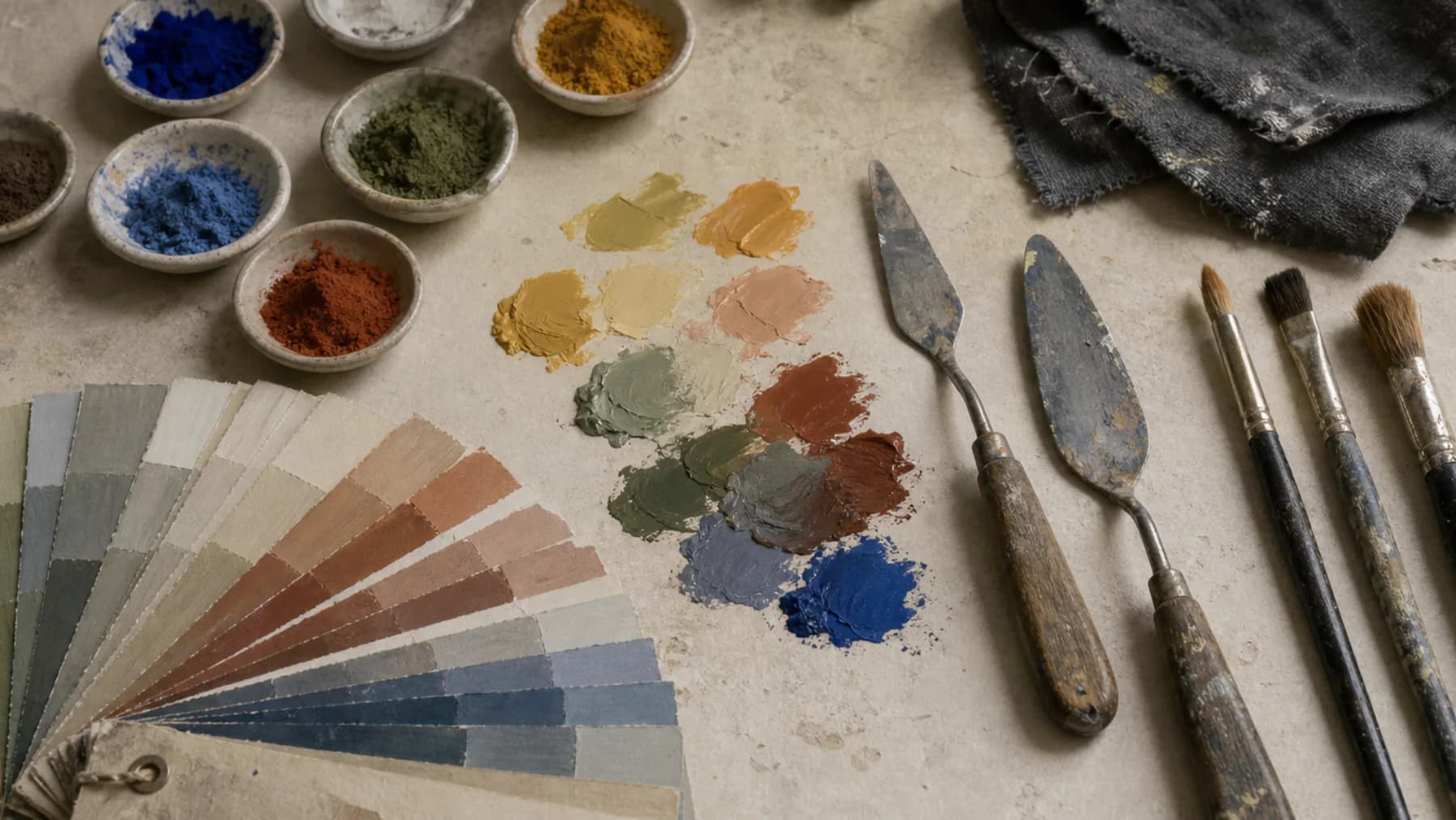
Oil Painting Solvents and Mediums: A Safety and Selection Guide
What this helps you do
Reduce avoidable solvent, ventilation, and rag-storage risks.
Solvents are the part of an oil painter's studio most likely to cause long-term harm if handled carelessly, and the part most often misunderstood. The good news is that the safety story has improved dramatically over the last twenty years. Most painters do not need turpentine. Most studios can be set up to be genuinely safe with a few small habits. Here is what is actually in the bottle, what to choose, and how to use it well.
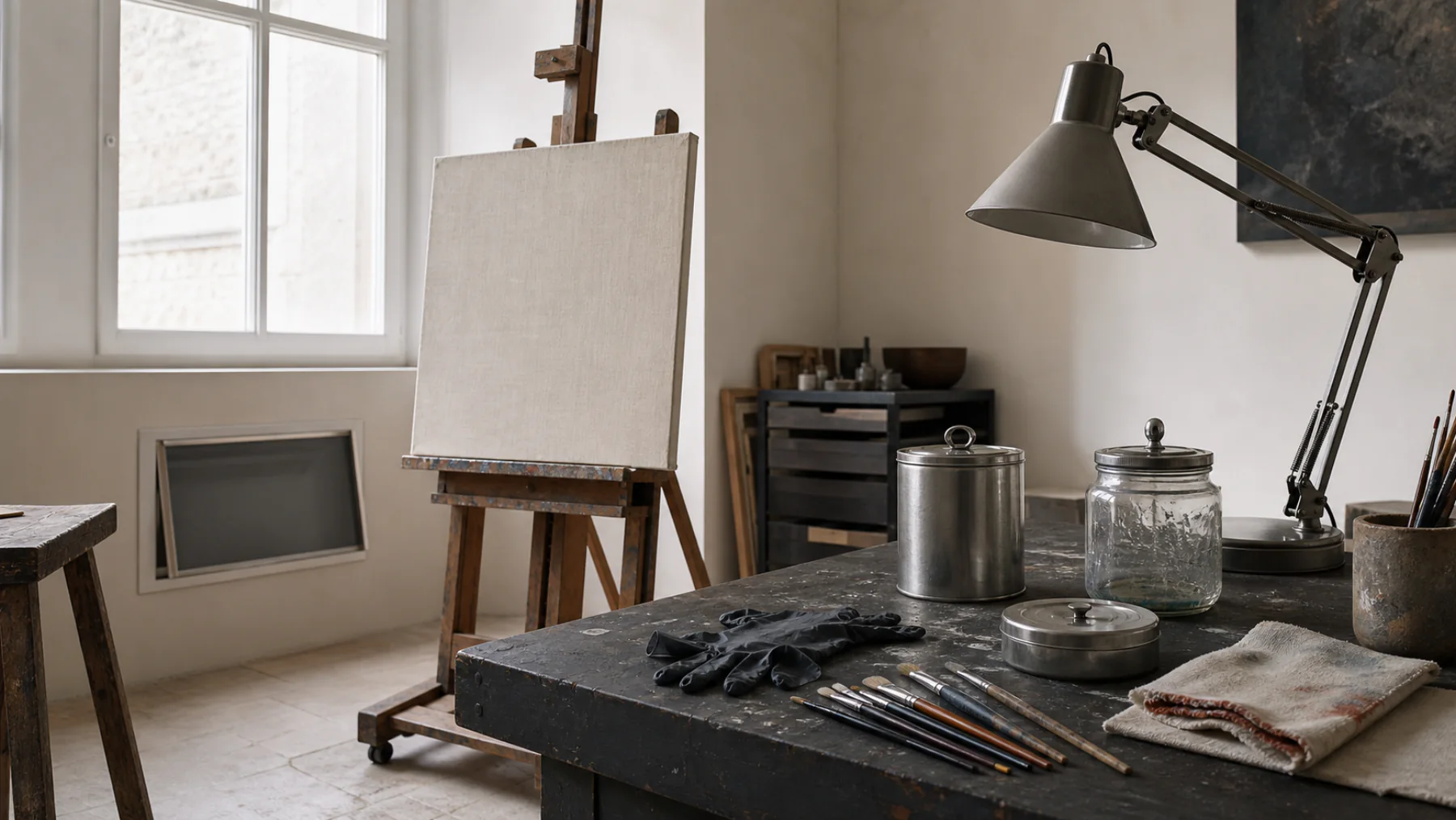
Why solvents matter
Solvents do two jobs in an oil painting studio. First, they thin oil paint so it flows and dries faster (most useful in the lean early layers of a painting). Second, they clean brushes and tools.
The risk is that solvent vapour and liquid can affect you through breathing, skin contact, or eye contact. Depending on the product and exposure, symptoms can include irritation, headache, dizziness, and dermatitis. Check the label and safety data sheet for each product, keep containers closed, and use ventilation suited to the task.
Turpentine
Distilled gum turpentine is the traditional oil-painter's solvent. It is made from pine resin, has a strong piney smell, evaporates quickly, and is a powerful solvent for natural resins like damar and mastic.
Turpentine is flammable and can irritate the eyes, skin, nose, and throat. NIOSH also lists headache, dizziness, skin sensitisation, and central nervous system effects among possible exposure effects. Avoid skin contact and do not rely on smell as a measure of safety.
Whether you need turpentine depends on the materials and process you choose. If you are considering it for a resin medium or varnish, follow that product's instructions and safety data sheet, and consider whether a lower-hazard approach would meet the same need.
Odourless mineral spirits
Odourless mineral spirits (OMS) are petroleum-derived solvents with reduced aromatic content. Formulations differ, so use the safety data sheet for the exact product instead of assuming that one brand's specifications apply to another.
Compared to turpentine, odourless mineral spirits:
- Can have a different evaporation rate and hazard profile from turpentine, depending on the product.
- May have lower aromatic content, but are still hazardous solvents that need controls for vapour, skin contact, and fire.
- Are often used for brush cleaning, though a covered container and the manufacturer's handling instructions still matter.
- Are not strong enough to dissolve damar or mastic, which is fine for almost all modern oil-painting workflows.
One important caveat: reduced odour does not show whether a space is adequately ventilated. Treat OMS as a hazardous solvent and use the controls specified on its label and safety data sheet.
The fat over lean rule
One of the oldest rules in oil painting: each layer should contain more oil than the one below it. Layers that are richer in oil (fat) on top of layers that are leaner (more solvent, less oil) dry slowly enough to avoid cracking. Reverse the order and the upper layer dries faster than the lower, which forces the paint film into tension and eventually splits.
In practice, this means using the most solvent in the first layer (a thinned underpainting), reducing solvent through the middle layers, and using only oil-rich medium or pure paint in the final layers. Knowing how much solvent and medium you use in each layer is more important than which specific brand.
Mediums in plain language
A medium is anything you mix into oil paint to change how it handles. There are dozens on the market, but they fall into a few clear categories:
- Drying oils (linseed, walnut, safflower, poppy). Slow drying, increase flow, add gloss. Linseed is the most common. Walnut yellows less but dries slower. Safflower and poppy yellow least but dry slowest of all.
- Stand oil and sun-thickened oils. Pre-polymerised drying oils. Smoother flow, slower drying, very glossy. Used in glazing mediums.
- Alkyd-based mediums (for example, alkyd mediums). These can speed drying. Follow the manufacturer's instructions and test a complete paint system before using it on important work.
- Solvent-only thinning. Just OMS. Strips oil from the paint and produces a leaner, faster-drying layer. Suitable only for early underpaintings. Avoid in later layers.
- Resin mediums (damar, mastic). Add gloss and toughness. Require turpentine to dissolve. Less common in contemporary practice.
Most working oil painters use one solvent (OMS) and one or two mediums (linseed oil and an alkyd) and stick with them for years. Variety in mediums is rarely worth the complication.
Ventilation that actually works
Ventilation needs depend on the solvent, amount used, room, and task. HSE notes that natural ventilation may not be enough for higher-risk work, including spraying. A few practical habits:
- Cross ventilation. Open windows or doors only where this creates a genuine flow of fresh air and does not introduce other risks. Do not assume an open window alone is adequate for every task.
- An exhaust fan low to the floor. Seek competent advice before installing or relying on extraction. Electrical equipment and solvent vapour can create a fire or ignition risk if they are not suitable for the environment.
- Closed solvent containers. Keep brush-cleaning jars covered when not in use. This reduces unnecessary evaporation and spill risk.
- No solvent in the living space. Studios that double as bedrooms or living rooms need a strict end-of-day cleanup. Cap and seal everything before you leave.
Rag disposal and fire risk
Oil-soaked rags can self-heat and ignite. Treat them as a fire risk, especially when they are piled together. Local fire and waste rules determine the safest disposal method for your location.
Two safe options:
- Submerge rags in water in a closed metal container, only if this is permitted by your local fire and waste authority. Keep the container away from ignition sources and arrange disposal promptly.
- Follow local hazardous-waste guidance. Your fire service, council, or waste contractor can specify the correct container and disposal route. Do not put solvent-contaminated material into a drain or ordinary waste unless local guidance expressly allows it.
Never leave oil-soaked rags crumpled in a pile, bag, or ordinary bin.
Brush cleaning without a solvent jar
Many painters now skip the solvent jar entirely. The simplest alternative:
- Wipe most of the paint off the brush on a clean rag or paper towel.
- Work a small amount of safflower or walnut oil into the bristles, then wipe.
- Rinse with mild soap (Master's Brush Cleaner or a simple olive-oil bar soap) under cool water until the lather runs clean.
- Reshape the brush with your fingers and store flat or bristles up.
This can reduce the amount of solvent used. Test the routine with your brush type and paint system, and handle any oil-soaked wipes as a potential fire risk.
A simple safer studio
The configuration most working oil painters land on:
- One bottle of odourless mineral spirits, used sparingly for early layers.
- One bottle of linseed or walnut oil for the main mediums.
- Optional: one alkyd medium for faster drying.
- No turpentine unless you are working with natural-resin varnishes.
- Ventilation and extraction appropriate to the product and task.
- A closed metal container and a local disposal plan for oily rags.
- Soap-and-water brush cleaning.
Choose the smallest practical amount of solvent, read each safety data sheet, and change the setup if you notice irritation or poor air quality. For persistent symptoms or a high-exposure task, seek professional health and safety advice.
Sources and further reading
Document the medium you used on every painting
Artwork Codex stores medium and varnish notes alongside each artwork, so conservators and collectors decades from now can trace exactly what is in the work.
Paid checkout requires a card. Cancel anytime. The Free plan remains available without a card.
Free plan available. A short note saves a long restoration headache.