What Is Artwork Provenance? A Simple Guide for Artists and Collectors
What this helps you do
Preserve the chain of records that supports an artwork's history.
Provenance sounds like a specialist word, but the idea is simple. It is the documented history of an artwork, especially its ownership and supporting records over time.
What provenance actually means
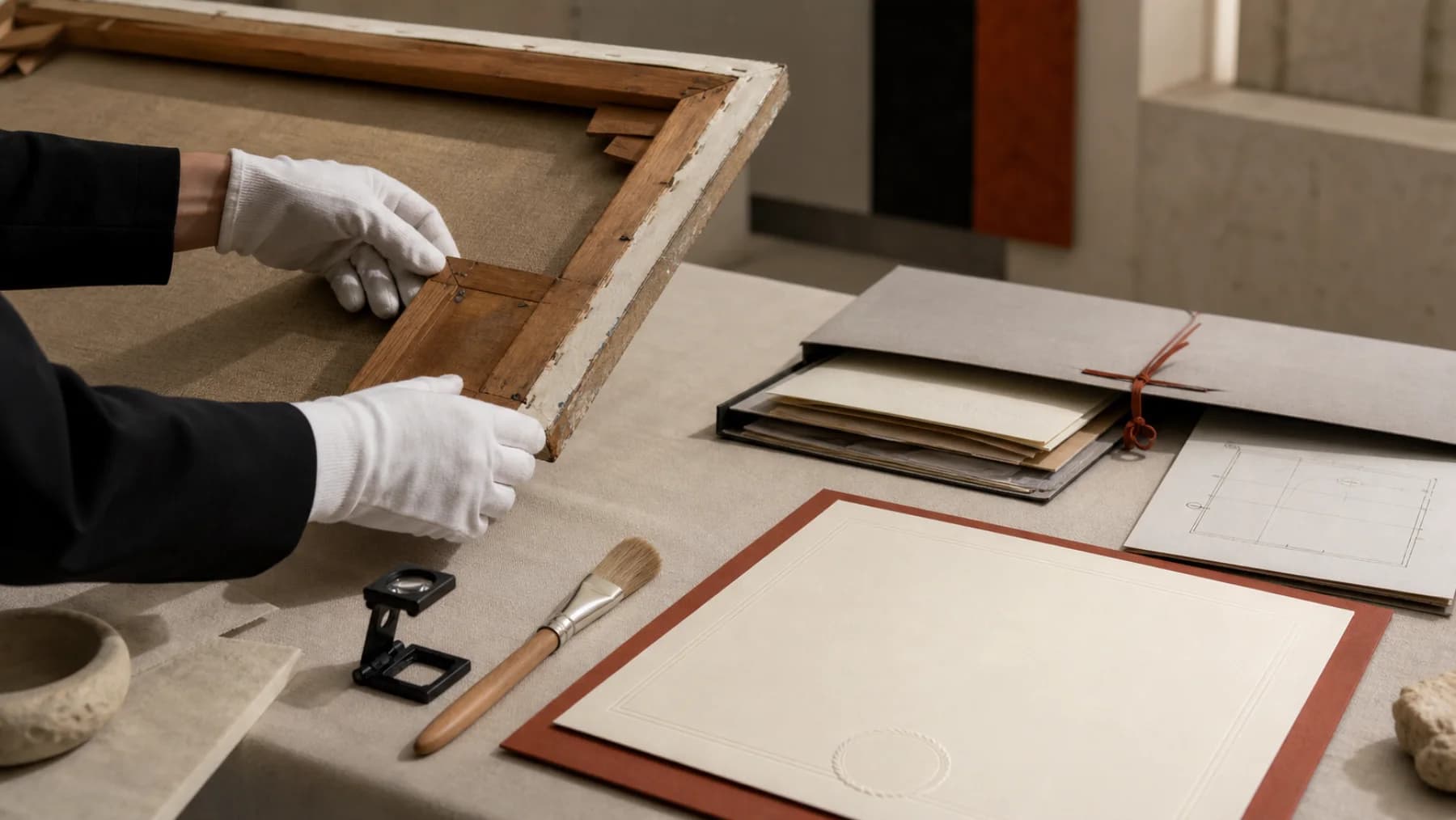
Provenance is the trail of documentation that helps establish where an artwork came from and how it moved through the world. In the simplest case, that may start with the artist and continue through a collector, gallery, institution, or estate.
Provenance is not only for museum-level works. It matters at every level of the market because it supports authenticity, ownership, valuation, insurance, resale, and estate planning.
Why provenance matters to artists
Artists sometimes think provenance only becomes relevant after a work enters the secondary market. In reality, artists create the first and most authoritative layer of provenance. Titles, dates, dimensions, images, signatures, certificates, invoices, and sales records all begin with the artist's own documentation habits.
If those records are incomplete, the burden usually returns later in the form of questions from collectors, galleries, or estates. Good provenance is much easier to build as you go than to reconstruct years afterward.
Documents that support provenance
Provenance is rarely one magical document. It is usually a collection of records that support one another.
- Artwork inventory records
- Certificates of authenticity
- Invoices and bills of sale
- Gallery consignment records
- Exhibition checklists and catalogs
- Shipping and condition reports
- Collection or estate records
Each document tells part of the story. Together, they create a more credible and traceable history of the work.
Provenance versus authenticity
These terms overlap, but they are not identical. Authenticity asks whether the work is genuine. Provenance asks what documented history supports that claim and what happened to the work over time.
A certificate of authenticity can help support provenance, but a COA on its own is not the whole story. A stronger record usually includes the artwork entry, a sale document, and any later exhibition or ownership records as well.
Good provenance starts with simple habits
You do not need a museum archive to keep useful provenance records. You need consistency. Assign an inventory number, photograph the work clearly, record when and where it was shown, and keep sale or consignment documents attached to the same record.
For collectors, the equivalent habit is to keep invoices, certificates, installation records, and any correspondence that clarifies acquisition details. Small habits now prevent large uncertainties later. Artwork Codex is designed to keep those records attached to the work instead of scattered across folders and inboxes.
Common provenance gaps
- Artwork sold without an invoice or certificate
- Images stored separately from the artwork record
- Ownership changes that were never documented
- Exhibition history remembered but not recorded
- Condition changes noted informally but not saved anywhere
None of these problems are rare. They are exactly why disciplined record keeping matters even for artists and collectors with relatively small inventories.
Build stronger provenance with better records
Artwork Codex helps artists and collectors keep artwork data, images, certificates, sales records, and related documents connected to each work.
Paid checkout requires a card. Cancel anytime. The Free plan remains available without a card.
Good provenance starts with clean records, not last-minute reconstruction.