Plein Air Painting Setup: A Practical Gear and Approach Guide
What this helps you do
Carry a compact outdoor setup that does not interrupt the painting.
Plein air painting is one of the fastest ways to improve as a painter and one of the easiest to overcomplicate. The shorter the kit list, the more locations open up to you, and the more your attention stays on the painting rather than on logistics. Here is what you actually need, what to leave at home, and the field habits that turn a hurried two-hour session into a finished piece.
The lighter the kit, the better the day
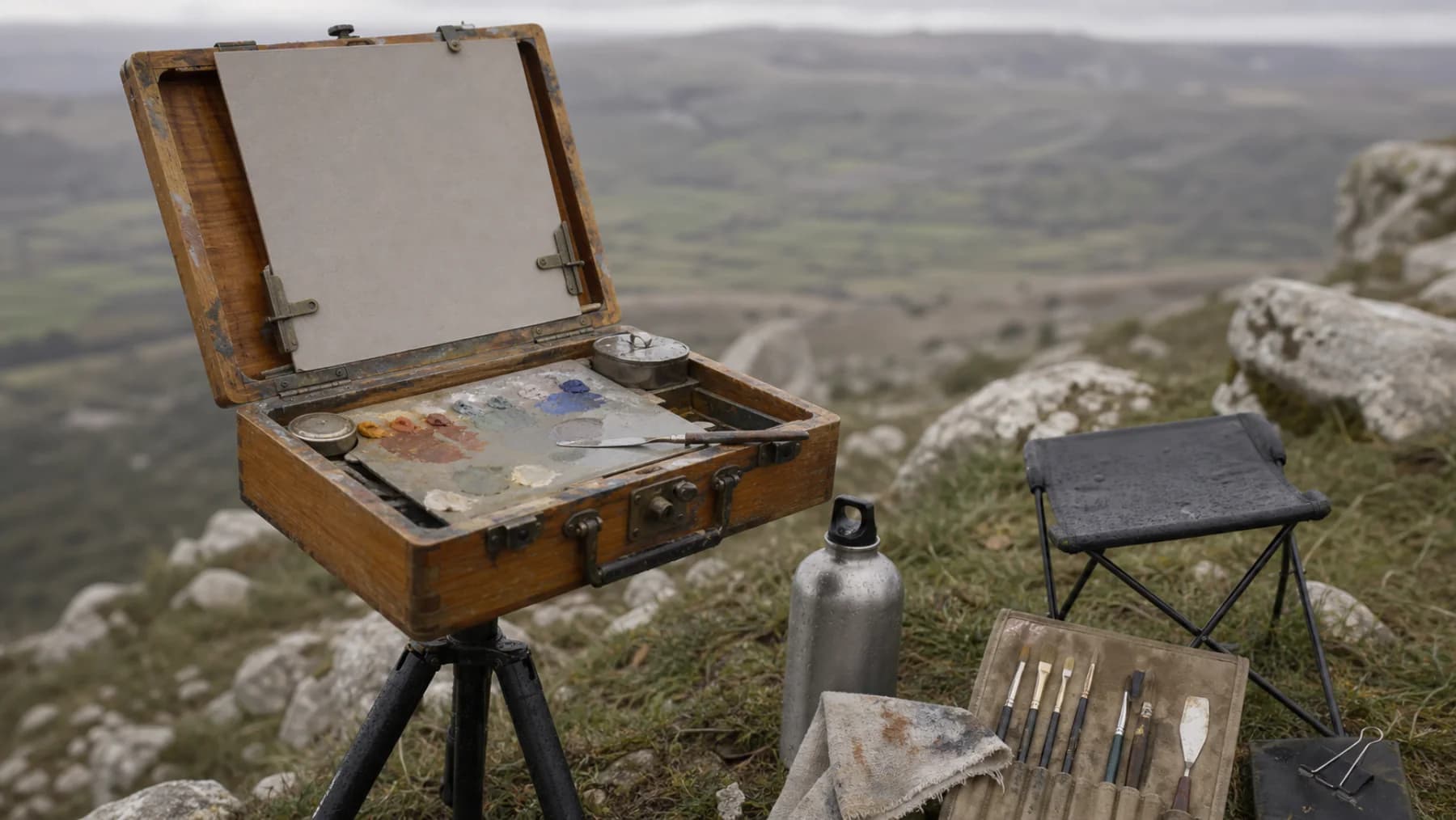
The single biggest decision in plein air painting is how much weight you carry. A heavy kit limits where you go and how long you stay. A light kit takes you up hills, into corners of streets, off paths and into the place the painting actually lives. Most experienced plein air painters paint a smaller surface than studio painters and carry far less than a beginner expects.
A reasonable target: a complete kit (easel, palette, paint, brushes, panels, solvent, towels, water) under five kilograms. Anything heavier and you start picking parking lots over views.
Easels: pochade box, French easel, or tripod rig
The three common configurations:
- Pochade box on a tripod. A small wooden or aluminium box that holds your palette and clips to a camera tripod. Light, fast to set up, suits panels up to about 12 by 16 inches. The current default for most working plein air painters. Popular options include the Guerrilla Painter 9x12, the Sienna Plein Air, the Strada Easel (aluminium and airline-friendly), and the Alla Prima Pochade.
- French easel. The traditional wooden box on three legs. Carries everything in one piece, supports larger canvases, but is heavy (often 5 to 7 kg empty), slow to set up, and tedious on rough ground. Suits painters who drive to a single spot and work on bigger surfaces.
- Tripod with a small shelf and panel holder. The lightest option. A sturdy tripod, a small palette tray, and a clamp or panel holder. Adequate for small panels and quick studies. Often used for backpacking or travel.
The right choice depends on how far you walk and how big you paint. For most beginners, a pochade box on a tripod is the best starting point.
Painting surfaces
Stretched canvas is rarely the right choice outdoors. Stretchers add weight, bulk, and vulnerability to wind. Use rigid panels instead:
- Canvas-on-board panels. Linen or cotton mounted on archival hardboard. The current standard. Light, rigid, and feel close to a stretched canvas under the brush. RayMar, Centurion, and SourceTek are common brands.
- Gessoed hardboard or MDF panels. Cheap and rigid. Good for studies and colour notes. Heavier than canvas-on-board but cost a fraction.
- Oil-primed paper. Very light, almost flat in your bag, perfect for backpacking or travel. Brands include Arches Huile and Centurion. Mount onto a board after the painting is dry.
Most plein air painters work between 6 by 8 and 11 by 14 inches. A two- to three-hour session is usually enough to finish a panel of that size, and starting larger tends to mean abandoning the work when light shifts.
A workable plein air palette
The case for a limited palette is even stronger outdoors, where light changes by the minute and decisions need to be fast. A reliable six-tube outdoor oil palette:
- Titanium white
- Cadmium yellow light or hansa yellow
- Yellow ochre
- Cadmium red light or pyrrole red
- Ultramarine blue
- Viridian or phthalo green (used sparingly)
From those six, you can mix nearly any colour the landscape presents. Some painters drop the green and lean on ultramarine and yellow ochre for muted greens. Others swap ultramarine for a cooler blue (cerulean, manganese hue) for coastal subjects. The principle stays the same: keep the palette small and learn it deeply.
Brushes and tools
Six to eight brushes is more than enough. A reasonable kit:
- Two flat or bright hog hair brushes for the main blocking-in (sizes 6 and 10).
- Two filberts for softer transitions (sizes 4 and 6).
- One small round or rigger for accents and signatures.
- One palette knife for mixing and for impasto passages.
Bristle brushes hold up better outdoors than synthetic, and a slightly worn brush is often better than a new one for the quick, broken touches plein air rewards.
Solvent in the field
Carry the smallest amount of solvent you can. A small leak- proof container of odourless mineral spirits is usually enough for thinning the first wash and the final brush cleanup. Some painters skip solvent entirely and use a small amount of safflower or walnut oil for thinning, then clean brushes back at the studio.
Whatever you carry, make sure the lid genuinely seals. Solvent loose in a backpack is the disaster every plein air painter eventually has once.
Wet panel transport
You will finish each session with a wet painting that needs to travel home without smudging. The standard solutions:
- Wet panel carriers. Slotted boxes (often corrugated plastic) sized to a specific panel format. Hold two to four panels face to face with a small air gap between them. RayMar Wet Panel Carriers are the common option.
- Cardboard separators with rubber bands. Cheap and works for short transport: face the wet panels, separate them with two small foam-board or cardboard spacers in opposite corners, and band them together.
- Pochade-box internal slots. Some pochade boxes (Strada, Sienna) accept a freshly painted panel inside the lid, freeing your hands during the walk back.
The other things that matter
- A painting umbrella or cap brim. Direct sun on your panel ruins your colour reading; the canvas appears far brighter than it is and you mix everything too dark.
- A sturdy tripod. Wind catches the painting like a sail. A tripod that tolerates a bit of weight under it (a stone bag, a backpack hung from the centre column) is much steadier on a breezy day.
- Bug spray and sunscreen. Both ruin a session if you forget them.
- A small viewfinder or phone. Used briefly to confirm composition before committing to the panel.
- Paper towels and a small rubbish bag. Pack out everything you bring, including used solvent and oil-soaked rags.
Field habits that pay off
A few approaches that turn outdoor sessions into finished paintings rather than wasted attempts:
- Commit to two hours. The light will change, but if you start with a clear value plan and a small panel, you can finish inside that window. Long sessions tend to chase the light and end with a confused painting.
- Plan in three values. Before you mix any colour, decide where your darks, mid-tones, and lights are. Block them in within the first 20 minutes. Refine on top of that structure.
- Note the light direction at the start. Mark a small arrow on your panel back or in a sketchbook so you can keep painting the same light even as the sun moves.
- Photograph the scene once. One reference photo is enough. Take it at the start, when the light matches your intent, and avoid paintings that drift toward whatever the sun is doing two hours later.
- Stop before you think you should. The best plein air paintings usually look unfinished. Resist the impulse to keep polishing. The economy is part of the genre.
Cataloguing field studies
Field studies are some of the most useful records a painter can keep. They are fast, honest, and they show colour relationships in real light, which a photograph cannot replicate. Treat them as proper inventory: title, date, location, weather, panel type, and a clear photograph of each one. Over a few years they become a personal reference library, more useful than any colour wheel or theory book.
The kit can be light. The records do not have to be.
Catalog field studies as part of your inventory
Artwork Codex makes it easy to record location, weather, and date alongside each plein air piece, so a year of field work becomes a searchable record.
Paid checkout requires a card. Cancel anytime. The Free plan remains available without a card.
Free plan available. Track studies the same way you track studio work.